
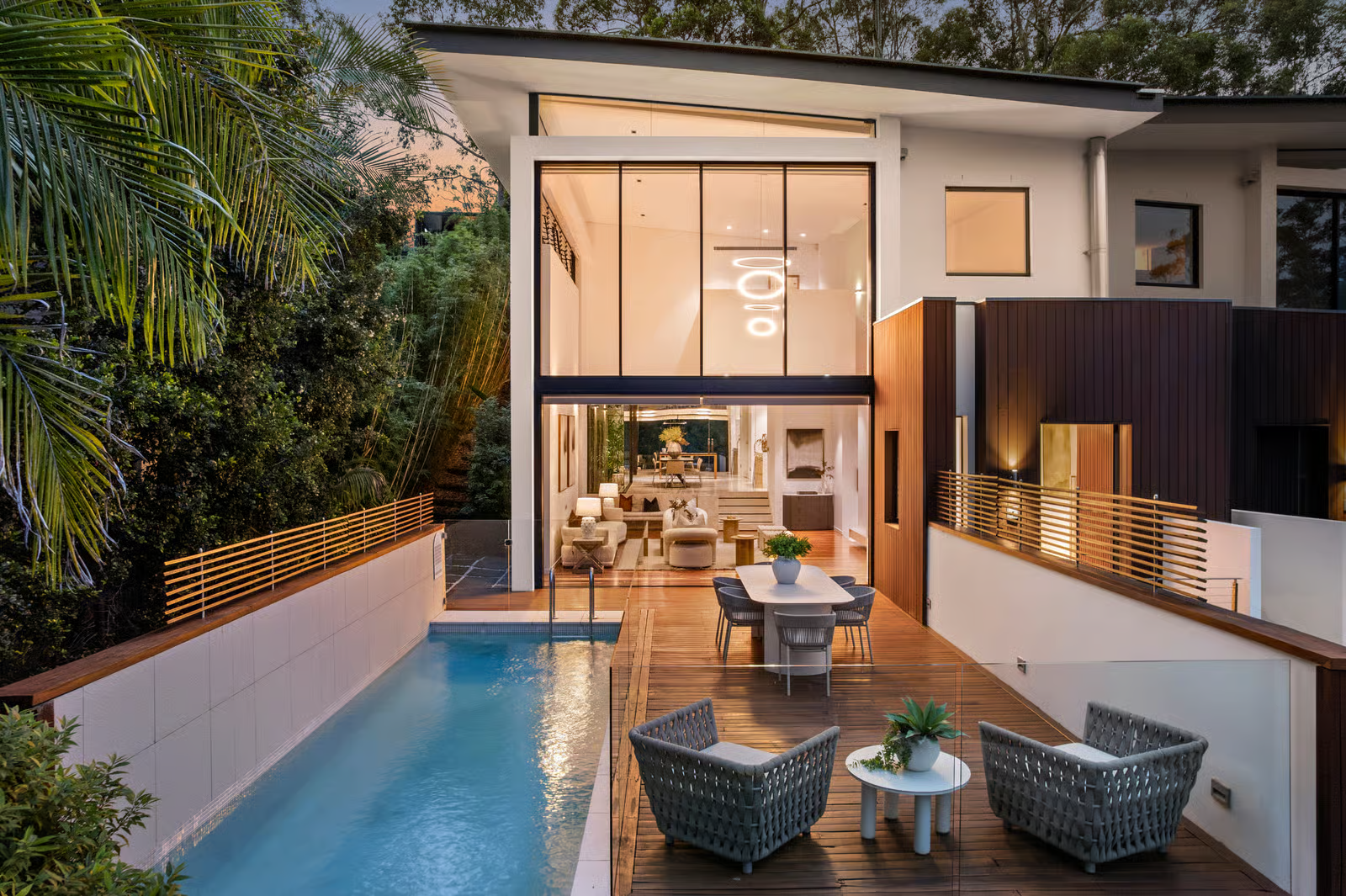
Working backwards from the first open
Everyone starts thinking about spring in spring, which is roughly a month too late. Here is the timeline I work to.
Ten weeks out. Appraisal, strategy, and the searches. On a waterfront property the searches matter more than anything else on this list, for reasons I will come to. This is also when landscaping starts, because plants need time and nothing looks worse in a photograph than a garden installed three days earlier.
Six weeks out. Trades. Painting, decking, seawall repairs, anything involving marine structures. Waterfront work runs late more often than inland work because it is weather and tide dependent.
Four weeks out. Styling, then photography and film. Book the shoot around tide and light rather than around the calendar.
Two weeks out. Copy, campaign approvals, buyer database work. Here the first calls go out before the advertising does.
The jetty is the campaign
If your property has a jetty, pontoon, boatshed, slipway or ramp, some part of it almost certainly sits below the mean high water mark. That land is Crown land. It is not yours, and it never was.
What you hold is a domestic waterfront licence from NSW Crown Lands. It carries an annual rent, it covers specified structures, and it comes with conditions. It also does not grant exclusive use. Even licensed, the public retains access to and along the foreshore.
Three things a buyer's solicitor will establish, and you want the answers first.
Whether a current licence exists, and exactly which structures it covers. A licence issued for a jetty does not automatically cover the pontoon someone added later.
Whether there are outstanding notices or unpaid rent attached to it. These follow the property into the negotiation.
Whether anything out there was built without approval. This is the one that does real damage. Crown Lands can require the removal of unauthorised structures at the owner's cost, and a buyer who learns that from their own solicitor will either walk or reprice.
On sale, the licence does not simply travel with the title. The incoming owner has to notify Crown Lands and either transfer the existing licence or apply for a new one. A campaign that has the licence documentation ready is selling a mooring. A campaign that does not is selling a question.
What a Foreshore Scenic Protection Area does to a buyer's plans
Waterfront property here sits inside a Foreshore Scenic Protection Area. It governs setbacks from the water, building height, and view sharing with neighbours. Designs are expected to follow the slope of the land and minimise visual impact from the water.
Buyers at this level are almost always thinking about what they would change. The ones who are serious will ask what is possible. Being able to answer, and better still to show a planning statement from a previous application, is worth more than another week of advertising.
Presentation, waterfront specifics
The general advice applies and I will not repeat it. These are the items particular to water.
The seawall. Buyers look at it, building inspectors report on it, and repairs are expensive enough to become a negotiating lever. If it needs work, it is cheaper to do it than to concede it.
Marine growth and staining on stairs, pontoons and steps. Pressure cleaning the water side is not optional and it is usually forgotten.
Corrosion on balustrades, fixings and lighting. Salt air is unforgiving and rust in a photograph reads as neglect across the whole property.
The view line. Something has grown since you last looked at the house from the water. It is worth taking a boat out and photographing your own home from fifty metres offshore, because that is the angle the drone will use and the angle every buyer remembers.
Decking and timber. Sand and re-oil. It photographs as new for a fraction of replacement.
Tide and light
This is the part unique to waterfront and the part most campaigns get wrong.
Shoot on a high tide. A low tide exposes mud, weed, pylons and the underside of a pontoon. The same property photographs as a different asset at high water and the tide charts are published a year ahead, so there is no excuse for guessing.
Shoot the aspect. A north-facing river frontage wants late morning. A west-facing block wants the hour before sunset. On the Parramatta and Lane Cove Rivers the light comes off the water and back onto the house, which is the single most flattering thing about these properties and is entirely a function of timing.
Every home I sell gets a film. On a waterfront home the film does something a photograph cannot, which is show the approach from the water and the way the light moves across the day.
One thing about spring itself
Spring brings buyers and it brings competing stock. In an area this tightly held that trade is usually worth taking, because the number of waterfront homes listed in any season is small enough that competition for attention is rarely the problem.
But spring is not automatic. A well-prepared waterfront campaign in February beats an unprepared one in October. If the licence documentation is not ready, or the seawall needs three months, the right answer is to wait. I will tell you that at the appraisal rather than after the campaign.